Table Of Contents:
- Thinking of Panchakarma? Why It’s More Than a Wellness Retreat
- What Panchakarma Really Means
- Why Panchakarma Is Not a Spa Therapy
- The Three Phases of Authentic Panchakarma
- Why Duration Matters
- The Role of Discipline and Lifestyle
- Who Should Consider Panchakarma
- Who Panchakarma Is Not For
- Conclusion
- FAQs
Thinking of Panchakarma? Why It’s More Than a Wellness Retreat
Many people write to us with a similar question:
“I am planning a detox holiday in India. Can I do Panchakarma in 3–5 days?”
This question reflects a common misunderstanding.
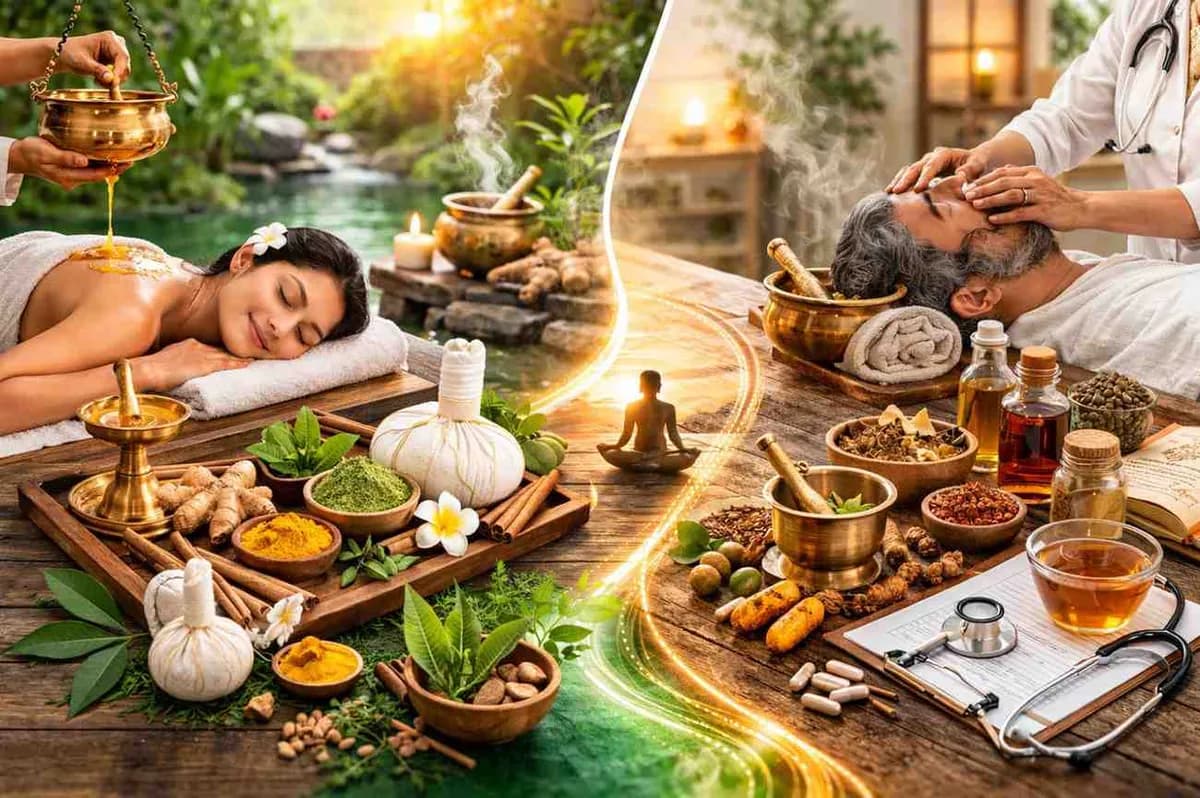
Around the world today, Panchakarma is often presented as a relaxation package or a wellness experience offered in spas and resorts. Oil massages, herbal therapies, steam baths, and a peaceful environment are highlighted as the main elements.
While these therapies are certainly part of the process, this version represents only a small and superficial understanding of what Panchakarma actually is.
In Classical Ayurveda, Panchakarma was never designed as a spa experience. It is a structured medical process meant for deep internal cleansing and correction of long-standing imbalances in the body. When done properly, Panchakarma is not simply about relaxation.
It is a medical therapeutic process aimed at:
Understanding this difference is important, because the expectations with which a person approaches Panchakarma often influence the outcome.
What Panchakarma Really Means
The word Panchakarma literally means “five actions,” referring to five specialized purification procedures described in classical Ayurvedic texts.
The purpose of these procedures is to eliminate accumulated metabolic waste and toxins (Ama) that the body is no longer able to clear effectively. According to Ayurveda, this accumulation plays a central role in many chronic conditions, including digestive disorders, metabolic diseases, skin problems, autoimmune conditions, and long-standing inflammatory states.
However, Panchakarma is not simply about removing toxins.
Its deeper objective is to restore the body’s regulatory intelligence — improving digestion (Agni), balancing physiological functions, and creating an internal environment where tissues can heal more effectively.
For this reason, authentic Panchakarma is always individualized. The procedures, their intensity, the duration, the diet, and the treatment sequence are decided only after a detailed medical assessment.
There is no standard package that suits everyone.
Why Panchakarma Is Not a Spa Therapy
In many wellness centres, Panchakarma is presented as a short program focused mainly on external therapies such as massages and steam treatments.
In classical practice, however, these external therapies are only preparatory steps.
Authentic Panchakarma includes:
The success of Panchakarma depends less on the external therapies themselves and more on:
In Ayurveda, the therapies alone do not create the result. The outcome depends on the entire therapeutic environment and the patient’s participation in the process.
The Three Phases of Authentic Panchakarma
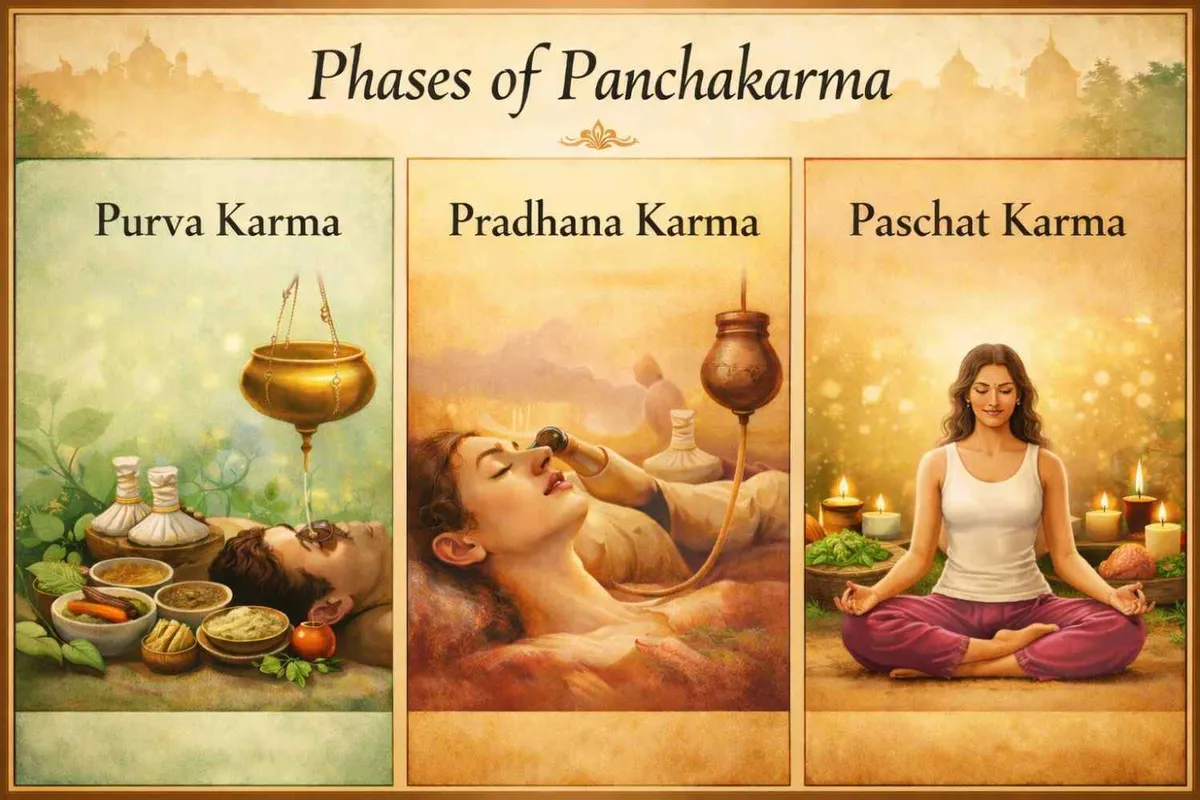
1. Preparation Phase (Purva Karma)
The body is first prepared to release deeply accumulated toxins.
This phase may include:
The goal is to mobilize toxins from deeper tissues into the digestive tract, where they can be eliminated safely.
2. Main Purification Procedures (Pradhana Karma)
Once the body is ready, the physician selects the appropriate procedure based on the patient’s condition, strength, and constitution.
These may include:
The choice, intensity, and timing are always individualized. During the course of treatment, they are often adjusted based on the patient’s response.
At every stage, the patient’s strength, comfort, and confidence are carefully considered. The aim is not to perform strong procedures, but to achieve effective cleansing in a safe and well-tolerated manner.
Authentic Panchakarma is therefore a dynamic process that evolves according to how the body responds.
3. Recovery Phase (Paschat Karma)
After purification, the digestive system remains sensitive and requires gradual restoration.
This phase includes:
This phase allows the body to stabilize, restores digestive strength (Agni), and ensures that the benefits of purification are retained.
Why Duration Matters
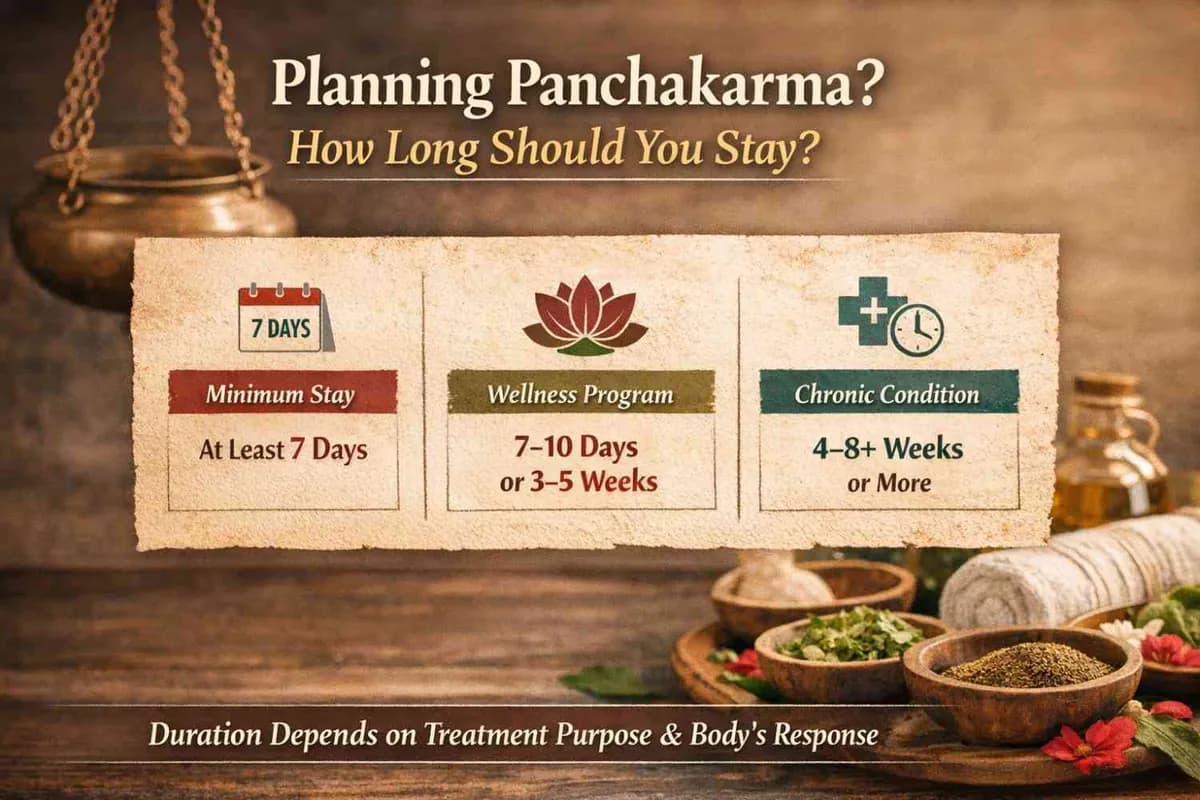
Deep cleansing and metabolic correction cannot be completed in a few days.
The preparation phase itself may take several days, and the recovery phase is equally important for long-term results.
As a general understanding:
In some cases, longer durations may be needed depending on the condition and the body’s response.
Panchakarma is not a rigid timeline-based program. The process is dynamic and often adjusted as treatment progresses. Patients who come with some flexibility in their schedule usually benefit more, as the duration can be extended if the body requires additional time for preparation, purification, or recovery.
Deep healing often unfolds gradually, and the exact duration cannot always be predicted precisely at the beginning.
The Role of Discipline and Lifestyle
One of the most important aspects of Panchakarma is patient participation.
The effectiveness of treatment depends on how carefully the patient follows:
During Panchakarma, the body enters a sensitive and responsive state. Proper routine helps conserve energy for healing and prevents disturbances that may reduce the effectiveness of treatment.
Panchakarma is not something that is simply done to the patient. It is a process that the patient actively participates in.
Who Should Consider Panchakarma
Panchakarma may be helpful for individuals who:
Who Panchakarma Is Not For
Panchakarma may not be suitable for those who:
Approaching Panchakarma with realistic expectations is essential for both safety and effectiveness.
Conclusion
Panchakarma is one of the most powerful therapeutic approaches described in Ayurveda. When done according to classical principles, it can bring deep and lasting changes in metabolism, immunity, and overall physiological balance.
At the same time, its success depends on adequate time, medical supervision, disciplined diet and lifestyle, and the patient’s willingness to trust the process.
Questions and concerns are always addressed, and the treatment is carefully guided. But when the patient is willing to surrender to the rhythm of the therapy — to follow the diet, routine, and recommendations — the healing process becomes smoother and more effective.
This alignment between the physician, the patient, and the treatment removes resistance and allows the body to respond more deeply.
If you are considering Panchakarma, it is best approached not as a detox holiday, but as a committed step toward long-term healing.
Considering Panchakarma?
Before planning your visit, schedule an online consultation with Dr. Sharma to understand your health condition, recommended duration of stay, expected outcomes, and whether Panchakarma is the right treatment for you. Book Your Online Consultation Today
FAQs - Everything You Need to Know Before Starting Panchakarma
Can Panchakarma be done in 3–5 days?
Short programs may provide relaxation or mild cleansing, but deeper therapeutic benefits usually require longer duration, especially for chronic conditions.
Is Panchakarma painful or uncomfortable?
When properly supervised, Panchakarma is planned according to the patient’s strength and tolerance. Procedures are adjusted to ensure safety and comfort.
Can I continue my regular medicines during Panchakarma?
In many cases, ongoing medications can be continued initially and adjusted gradually under medical supervision.
Do I need to follow a strict diet during Panchakarma?
Yes. Diet is an essential part of the treatment and plays a major role in the overall outcome.
Who benefits the most from Panchakarma?
Individuals with chronic health issues, metabolic or inflammatory conditions, or those seeking deep, structured healing usually benefit the most.