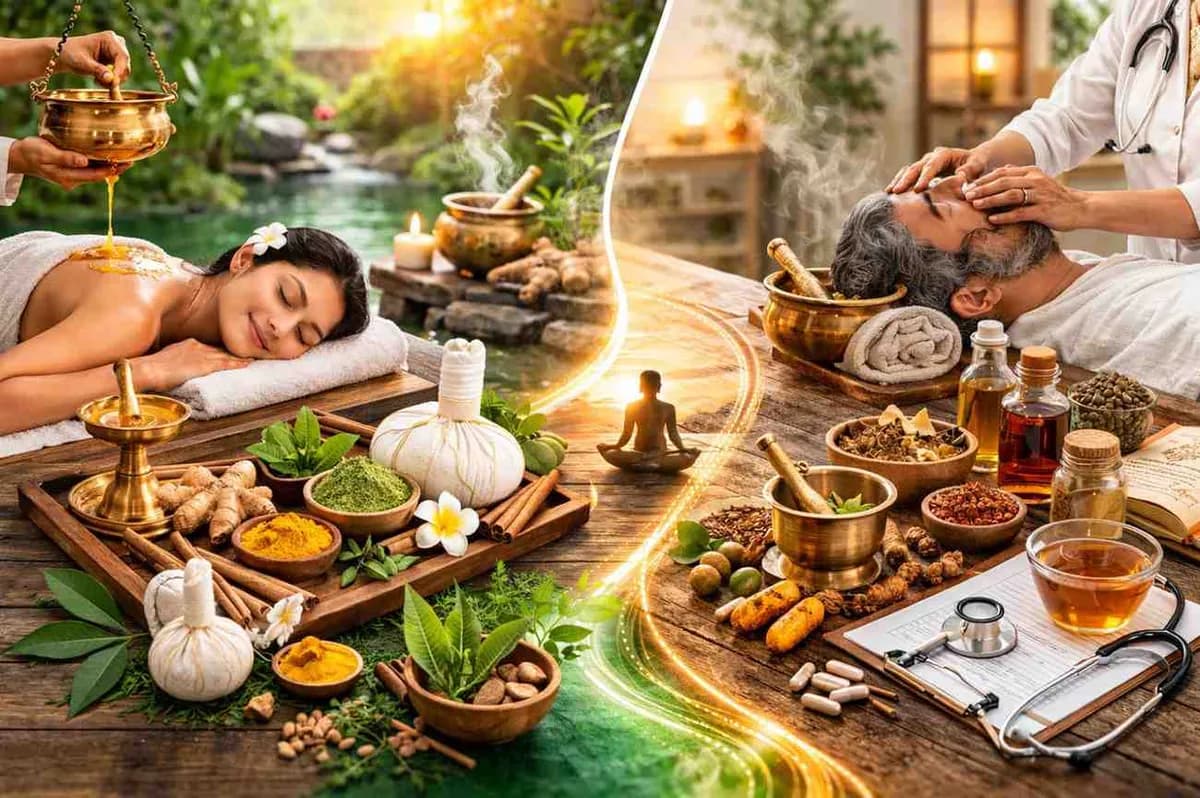
Many people assume that Panchakarma is either a luxury detox retreat or a treatment reserved only for serious illness. In reality, it can serve both purposes — but the intention, structure, and clinical approach differ significantly.
One of the most common questions we receive is:
“Should I come for Panchakarma for wellness, or is it only meant for disease?”
The short answer is that Panchakarma can be used for both. However, the intention, planning, and clinical approach differ depending on whether the person is seeking preventive wellness or treatment for a chronic condition.
Table Of Contents:
- Wellness and Disease: The Same Principles, Different Intent
- Duration: Flexibility vs Therapeutic Necessity
- A Clinical Difference in Decision-Making
- Internal Medicines and Treatment Intensity
- Activity, Rest, and Sightseeing
- What Remains the Same for Both
- The Role of Patient Commitment
- When to Choose Wellness Panchakarma
- When Panchakarma Becomes a Therapeutic Process
- Quick Summary Table of Differences
- Conclusion
Wellness and Disease: The Same Principles, Different Intent
At Himveda, the fundamental principles of Panchakarma remain the same for both wellness seekers and patients with chronic illness.
The difference lies not in the therapies themselves, but in:
Panchakarma for wellness focuses on metabolic reset, prevention, and improving overall physiological balance.
When managing chronic disease, Panchakarma becomes a structured therapeutic intervention.
Duration: Flexibility vs Therapeutic Necessity
A common misconception is that wellness requires only a short stay.
In practice:
If someone asks:
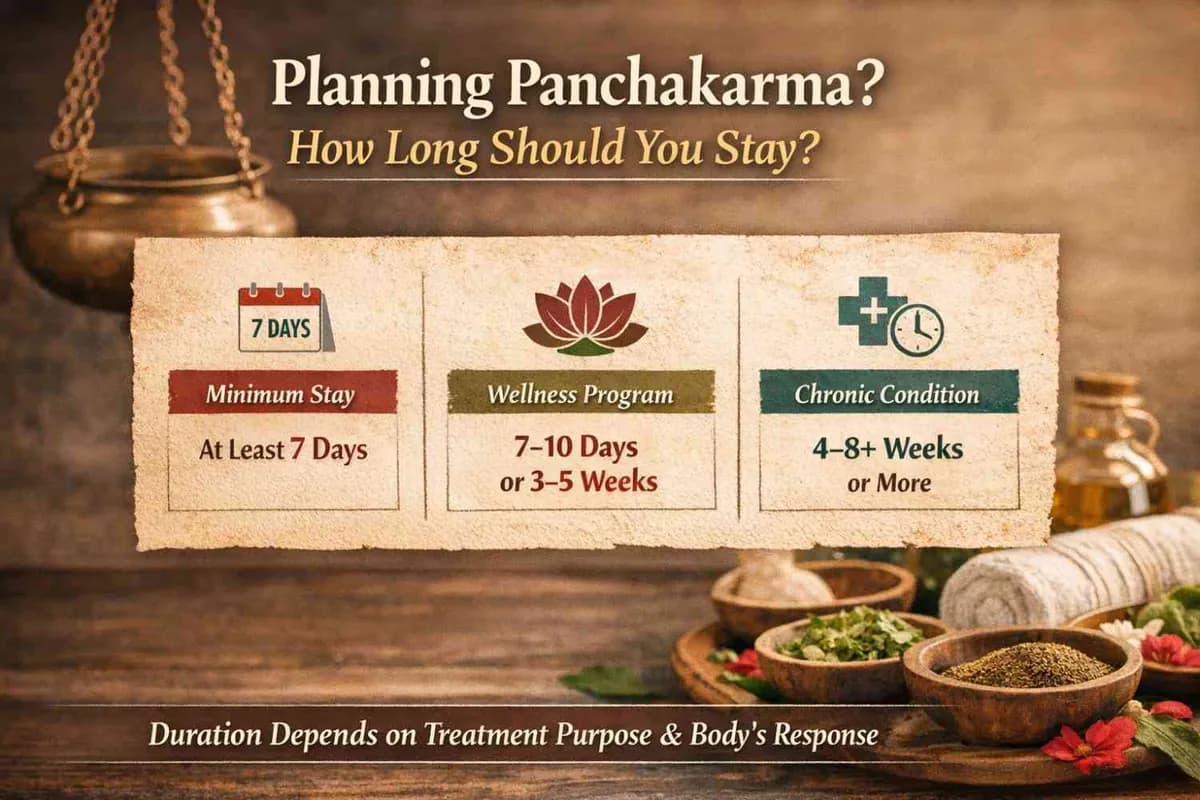
“If I have only seven days, will it be considered wellness?” Yes, a seven-day program is usually considered wellness-level Panchakarma.
“But is wellness limited to seven days?” No. Wellness programs can be much longer — three to five weeks of Panchakarma often provide deeper preventive and restorative benefits.
For wellness seekers, the treatment plan is often adjusted according to the time the person can comfortably allocate.
In chronic disease, however, duration becomes a therapeutic necessity rather than a preference.
Most chronic conditions require:
While we provide an estimated timeline after consultation, the process remains fluid. Deep healing often unfolds gradually, and additional time may sometimes be required for optimal results.
A Clinical Difference in Decision-Making
The difference between wellness and disease becomes clearer in clinical situations.
Consider two individuals of similar age and physical strength. Both are assessed and found suitable for therapeutic purgation (Virechana).
Case 1: Wellness Seeker
The person is healthy but visiting for preventive care. Although the body type and strength make him suitable for the procedure, he feels hesitant or uncomfortable.
In such cases,
Case 2: Chronic Disease Patient
Now consider a patient with a long-standing condition who is clinically fit for the same procedure, and where the treatment is likely to play an important role in recovery.
If the patient refuses due to hesitation,
This reflects the difference in clinical responsibility between preventive care and disease management.
Internal Medicines and Treatment Intensity
Another difference lies in the use of internal medicines.
Activity, Rest, and Sightseeing
What Remains the Same for Both
However, certain aspects remain the same for both:
Whether for wellness or disease, Panchakarma remains a medically supervised process.
The Role of Patient Commitment
The success of Panchakarma depends largely on patient participation.
For both wellness and disease:
In chronic disease, commitment becomes even more important.
When to Choose Wellness Panchakarma
Wellness-oriented Panchakarma may be suitable if you:
Longer wellness programs (3–5 weeks) often provide much deeper benefits than short visits.
When Panchakarma Becomes a Therapeutic Process
If you have a chronic condition such as:
Panchakarma should be approached as a structured therapeutic program rather than a wellness experience.
This requires:
Quick Summary Table of Differences
| Main Goal | Prevention, Rejuvenation, Relaxation | Cure, Reversal, Deep Detoxification | Duration | Flexible (7 days to 3–5 weeks) | 4–8 weeks or more, based on clinical need | Time Flexibility | Adjusted according to patient’s available time | Guided primarily by therapeutic necessity | Treatment Intensity | Moderate and preventive | Higher and condition-specific | Focus | Reducing general stress/toxins | Removing deep-seated Ama | Decision-Making | Patient comfort and preference are considered |
Medical necessity plays a stronger role in decision-making
Conclusion
At its core, Panchakarma follows the same classical principles whether used for wellness or disease.
The difference lies in intention and commitment.
Wellness programs work around the patient’s available time and comfort. Chronic disease treatment, however, requires a more structured approach, where duration and therapeutic decisions are guided primarily by clinical need.
Not Sure Which Approach Is Right for You?
Whether you are considering Panchakarma for preventive wellness or for a chronic condition, the appropriate program and duration should be determined after a proper medical evaluation.
Consult directly with Dr. Sharma to understand which approach is suitable for your health status and goals. Book Your Consultation with Dr. Sharma
Frequently Asked Questions (FAQs) About Panchakarma for Wellness and Chronic Disease
Is Panchakarma only for people with diseases?
No. Panchakarma can be done for preventive wellness as well. Many people undergo it to improve digestion, energy, sleep, and overall metabolic balance even if they do not have a specific medical condition.
How long should I stay if I am coming only for wellness?
While a short stay of about 7–10 days can provide basic cleansing and relaxation, deeper wellness benefits are usually seen when Panchakarma is done for 3–5 weeks.
Does Panchakarma for chronic disease require a longer stay?
Yes. Chronic conditions usually require 4–8 weeks or more, depending on the condition and the body’s response. The exact duration may be adjusted during treatment.
Will the treatments be very different for wellness and disease?
The core principles remain the same. However, in chronic disease, treatment planning is more structured, internal medicines are used more actively, and therapeutic decisions are guided primarily by medical need.
Can I decide which procedures I want to take?
Your preferences and concerns are always discussed. However, for chronic conditions, certain procedures may be strongly recommended if they are important for recovery. The treatment plan is finalized based on medical assessment.
Is the diet and lifestyle discipline the same for wellness and disease?
Yes. Diet and routine are essential parts of Panchakarma and play a major role in the effectiveness of the treatment in both cases.
What if I am not sure whether I need wellness or treatment?
This is best decided after a consultation. Based on your health status and goals, the physician can guide you toward the most appropriate approach.